Bleeding After Dental Trauma: When an Emergency Dentist Is Essential
A mouth injury can look worse than it is, or far more minor than it feels. Blood mixes quickly with saliva, lips swell fast, and panic tends to fill in the blanks. I have seen people arrive convinced they were losing a tooth when the bleeding was mostly from a torn lip, and I have seen the opposite, a chipped front tooth with only a little blood hiding a deeper injury to the nerve or bone.
That is why dental trauma deserves a calm but serious response. Bleeding after a hit to the mouth is not automatically catastrophic, but it is never something to shrug off. Teeth sit in bone, surrounded by delicate ligament fibers, gum tissue, nerves, and blood vessels. A blow from a fall, a sports collision, a fist, a steering wheel, or even a hard bite on an unexpected object can injure several of those structures at once. The key question is not simply whether there is blood. It is where the blood is coming from, how much there is, and whether the injury threatens the tooth, the jaw, or your ability to breathe and swallow safely.
In many of these cases, an Emergency Dentist is not just helpful but necessary. Timing matters. The first hour after trauma can shape whether a tooth can be stabilized, whether infection risk rises, and whether a hidden fracture gets caught before it worsens.
Why mouth injuries bleed so much
Oral tissues are richly supplied with blood. Gums, lips, cheeks, and the tongue can bleed dramatically even from relatively small cuts. A split lip often looks alarming because the area is vascular. The same is true of the tongue, which may ooze heavily from a small laceration.
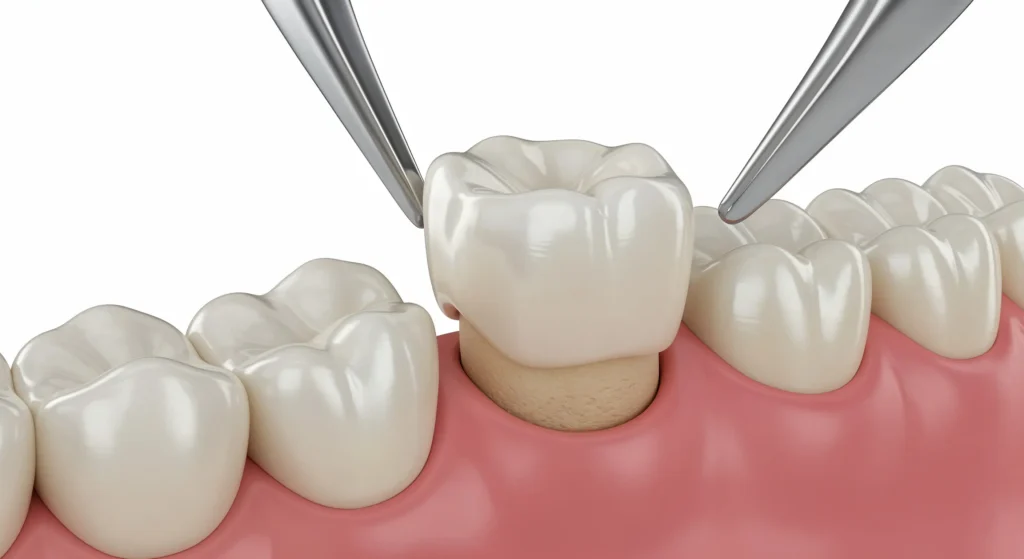
Teeth themselves do not bleed on the outside, but the tissues around them do. If a tooth is loosened, partially displaced, or knocked out, the periodontal ligament and nearby gum tissue tear. That produces bleeding at the socket or around the gumline. A fracture that extends into the pulp, the living center of the tooth, may also create visible blood from the broken tooth itself, especially if the crack exposes the nerve.
It is also common for patients to misread the source. Blood may drip from the gum and seem like it is coming from the tooth. A bitten cheek can bleed enough to make the whole mouth taste metallic. After trauma, that distinction can be difficult to sort out at home, which is one reason prompt evaluation matters.
What counts as dental trauma
People often picture only a knocked out tooth, but dental trauma covers a broader range of injuries. A tooth may crack, shift, loosen, sink deeper into the gum, or break at the edge. The supporting bone can fracture. The lips and tongue may split. Existing dental work, such as crowns or veneers, can shear off and leave sensitive tooth structure exposed.
A teenager catching an elbow during basketball, a child falling off a scooter, and an adult slipping on wet stairs can all present differently, yet each can have an urgent dental problem. Trauma is defined less by the mechanism and more by the damage it causes.
The situations that deserve special respect are those involving front teeth, visible displacement, ongoing bleeding, trouble biting together, numbness, facial swelling, or any suspicion of a jaw injury. If a tooth was normal before the incident and now feels high, loose, sharp, or painful to tap, there is a reason.
The first minutes after the injury
The first priority is always overall safety. If the person has lost consciousness, has heavy facial bleeding that will not slow, has trouble breathing, or may have a head or jaw fracture, medical emergency care takes precedence. Dentistry does not replace emergency medicine when the injury extends beyond the mouth.
If the person is alert and stable, direct pressure is the most useful first step for dental bleeding. A clean piece of gauze, or in a pinch a clean cloth, placed over the area and held firmly for 10 to 15 minutes often slows bleeding substantially. What tends to fail is repeated checking every 20 seconds. Constantly lifting the gauze disrupts clot formation.
A cold compress against the outside of the lip or cheek can reduce swelling and help control oozing. Gentle rinsing with water can clear pooled blood, but vigorous swishing should be avoided because it can restart bleeding.
If a tooth has been knocked out completely, hold it by the crown, not the root. If it is visibly dirty, rinse it briefly with milk or saline if available, or clean water if not. Do not scrub it. In the best-case scenario, it may be replanted immediately by a professional, and the cells on the root surface matter. Time is critical here. Teeth that are replanted quickly have a much better chance of long-term survival.
When bleeding means you should call an Emergency Dentist right away
Not every bloody mouth injury needs same-minute intervention, but some do. If the bleeding continues despite steady pressure, or if it slows and restarts repeatedly, an Emergency Dentist should be contacted without delay. Persistent oral bleeding is not just unpleasant. It often signals a deeper laceration, a tooth displacement injury, or a socket injury that needs stabilization.
These situations deserve urgent dental assessment:
- Bleeding that continues after 10 to 15 minutes of firm pressure.
- A tooth that is loose, pushed out of position, or knocked out.
- A fractured tooth with visible pink or red tissue, or sharp pain to air or touch.
- Bleeding from the gumline after a blow, especially with bite changes or swelling.
- Any trauma in a person taking blood thinners or with a known bleeding disorder.
That last category deserves emphasis. Patients on warfarin, apixaban, rivaroxaban, clopidogrel, or similar medications may bleed longer from injuries that would otherwise stop quickly. The same caution applies to people with platelet disorders, liver disease, or a history of difficult clotting. Even a modest laceration can become harder to manage at home.
Signs the problem is bigger than a simple cut
A torn lip is painful, but usually straightforward. Dental injuries become more concerning when there are clues that the tooth or jaw absorbed the force. One of the most reliable signs is a bite that suddenly feels wrong. Patients often describe it as, “My teeth do not fit together the way they did this morning.” That can mean a tooth has shifted, the supporting bone is involved, or the jaw itself has been injured.
Another red flag is a tooth that feels longer or shorter than before. A tooth that appears pushed inward is an intrusion injury, which is more serious than many people realize. A tooth that looks elongated may be partially dislodged. Both need urgent evaluation.
Numbness in the lip or chin can suggest nerve involvement. Swelling that increases steadily over several hours, especially with bruising, can point to deeper tissue trauma. A crack that runs below the gumline may not be obvious at first, but pain when biting and localized bleeding around one tooth often give it away.
Children present a particular challenge because they may not describe what they feel clearly. A child might say only that “my tooth feels funny,” while the real issue is a displaced primary tooth pressing toward the permanent tooth bud beneath it. Pediatric dental trauma often looks deceptively mild at first glance, which is why professional assessment is so valuable.
Knocked out teeth and the clock
Among all dental trauma scenarios, a completely avulsed permanent tooth is one of the most time-sensitive. The goal is to preserve the periodontal ligament cells on the root and reestablish the tooth in its socket as soon as possible. If the patient is old enough and calm enough, and if the tooth is a permanent tooth rather than a baby tooth, immediate replantation can sometimes be attempted. Many people, understandably, are too shaken to do that, so storing the tooth properly and reaching an Emergency Dentist fast becomes the practical priority.
Milk is often the most realistic transport medium at home or on the sidelines of a game. Specialized tooth preservation solutions exist, but few families carry them around. Saline can work. Dry tissue or paper towel is a poor choice because it dehydrates the root surface.
Baby teeth are different. A knocked out primary tooth should not be replanted because of the risk of damaging the permanent tooth developing underneath. This is a common point of confusion and a good reason not to rely on guesswork after a child’s injury.
I have seen successful outcomes when a permanent tooth reached care in under 30 minutes, and disappointing ones when several hours passed because the injury “didn’t seem that bad.” A tooth may still be managed later, but the odds change with time.
Fractured teeth are not always cosmetic problems
A chipped tooth can be a simple enamel injury, or it can be a structural and biological problem. The difference is not always obvious to the patient. A tiny edge chip may only need smoothing or bonding. A larger fracture that exposes dentin often causes sensitivity to cold and air. If the pulp is exposed, there may be pinpoint bleeding from the center of the broken tooth, sometimes accompanied by severe pain.
Even if bleeding is modest, a fracture can create pathways for bacterial contamination. Delaying care increases the chance that a tooth needing a simple protective restoration today will require root canal treatment later. In back teeth, vertical cracks are especially easy to underestimate because they may not show well in the mirror. Patients often focus on the lip cut and miss the cracked molar that hurts only when they chew.
An Emergency Dentist can determine whether the tooth can be bonded, splinted, protected with a temporary material, or whether more involved treatment is needed. The point is not to alarm people over every chip. It is to recognize that post-traumatic bleeding plus a broken tooth deserves more than an ice pack and hope.
Soft tissue injuries that need more than home care
Cuts to the lips, cheeks, gums, and tongue often heal well because oral tissues regenerate quickly. Still, some lacerations need suturing or careful cleaning. A deep lip cut that crosses the border where the pink lip meets the skin can heal with a visible step or notch if not aligned properly. Tongue lacerations can continue to ooze because the tongue moves constantly. Embedded tooth fragments are another issue. After a front tooth breaks, part of it may be driven into the lip. If that fragment is not found and removed, healing can be prolonged and uncomfortable.
Gum tears near a tooth should not be dismissed as “just the gums.” In many trauma cases, the gum injury is the surface evidence of an injury to the tooth socket. The tissue may need repositioning, and the tooth may need splinting.
The mouth is not sterile, so contaminated wounds matter. Falls on pavement, sports field dirt, and bites involving braces or broken restorations can all introduce debris. Careful evaluation reduces the risk of infection and identifies whether tetanus considerations or medical follow-up are needed, though that aspect is generally handled by a physician if relevant.
What an Emergency Dentist looks for during the visit
The exam after trauma is more investigative than many patients expect. The dentist is not just checking for a visible break. They https://maps.app.goo.gl/LyyJttsiUMY7VSfU7 are evaluating mobility, percussion tenderness, bite alignment, soft tissue integrity, and the possibility of root or bone injury. Dental radiographs often help, but trauma diagnosis is not made from X-rays alone. Some root fractures are subtle. Some luxation injuries show more in the clinical position of the tooth than in the image.
The dentist may test the vitality of injured teeth, though early results can be unreliable. A tooth that does not respond the same day is not automatically dead. Trauma can temporarily stun the nerve. This is one reason follow-up matters. Teeth that seem stable at the emergency visit may discolor or fail vitality testing weeks later.
Treatment can range from simple hemostasis and observation to splinting displaced teeth, placing temporary restorations, prescribing a mouth rinse, adjusting the bite, or coordinating referral to an oral surgeon or endodontist. Professional judgment matters because overtreatment and undertreatment both carry costs. Splinting a slightly mobile tooth that would recover on its own is unnecessary. Missing a root fracture is worse.
Home care while waiting to be seen
There is a practical gap between injury and treatment, even when someone acts quickly. During that time, the goal is to protect the area and avoid making things worse.
If you are waiting for an appointment after dental trauma, these measures are usually sensible:
- Keep firm pressure on active bleeding sites with clean gauze.
- Use a cold compress on the outside of the face in short intervals.
- Eat soft foods and avoid biting with the injured teeth.
- Rinse gently with water, or salt water later if advised.
- Save any tooth fragments and bring them to the appointment.
Avoid aspirin if bleeding is significant, unless it is part of a physician-directed regimen you should not interrupt without advice. Many people reach for whatever pain reliever is nearby, but aspirin can worsen bleeding. Ibuprofen may help with pain and swelling for some patients, though medical history matters. If someone has kidney disease, ulcers, anticoagulant therapy, or another contraindication, that calculation changes.
Smoking and alcohol also work against healing in the first day or two after trauma. They irritate tissues and can disrupt clot stability.
The injuries people most often underestimate
Two patterns are commonly missed. The first is a tooth that is not broken but feels “a little loose.” Minor mobility after a blow can reflect damage to the supporting ligament that needs monitoring or splinting. Left alone, that tooth may become more painful, drift, or lose vitality.
The second is bleeding around one tooth after a collision, with no obvious crack. Patients often assume they merely bruised the gum. Sometimes they did. Sometimes the tooth has been luxated or the root has fractured. These are not diagnoses anyone should make from a bathroom mirror.
Adults with crowns, veneers, implants, or previous root canal treatment also have unique vulnerabilities. A blow can loosen a crown margin, fracture the root under an old restoration, or damage the bone around an implant. The outside appearance can be deceptively neat while the support underneath has changed.
Children, sports, and the practical realities of trauma
Children and adolescents account for a large share of dental injuries. Playgrounds, bicycles, trampolines, skateboards, and contact sports are repeat offenders. In real life, trauma seldom happens in a clean, controlled setting. It happens at dusk in a parking lot, at a tournament two towns over, or when a parent is trying to decide whether to head home, call the pediatrician, or find emergency dental care.
Mouthguards lower risk, especially for sports involving contact, balls, elbows, or falls. They do not eliminate injuries, but they often reduce the severity. Custom guards generally fit and protect better than generic boil-and-bite versions, though a well-fitted store-bought guard is better than none. What matters after an injury, however, is not the retrospective debate about prevention. It is preserving the tooth and the surrounding tissues from avoidable damage.
For children with baby teeth, urgency still exists, even when replantation is not appropriate. A displaced primary tooth can injure soft tissues, interfere with eating, and in some cases affect the developing permanent tooth. Parents are often relieved to hear that not every baby tooth injury is a disaster, but they should not interpret that as a reason to skip evaluation when there is bleeding, displacement, or pain.
Why waiting overnight can change the outcome
There is a natural temptation to “see how it looks in the morning.” Sometimes that is reasonable for a tiny chip with no bleeding, no pain, and no bite change. It is not a sound plan for active bleeding, a loose or moved tooth, a knocked out permanent tooth, or a deeper laceration.
A lot can happen overnight. Swelling increases. Clots dislodge. Teeth dry out or shift. A pulp exposure becomes contaminated. Pain ramps up once adrenaline fades. By the time a patient seeks care the next day, the treatment path may be more complex and more expensive than it would have been just a few hours earlier.
An Emergency Dentist is essential when immediate evaluation can preserve function, reduce complications, or stop bleeding that home measures have not controlled. That threshold is reached more often than people think. Dental trauma is not routine toothache care with a dramatic backstory. It is a distinct category of injury where timing, handling, and accurate diagnosis all matter.
The bottom line for patients and families
If there is blood after a mouth injury, start with pressure and calm observation, but do not let the apparent mess fool you into either panic or delay. Some oral bleeding comes from superficial tissue and settles quickly. Some is the visible tip of a tooth displacement, root fracture, or socket injury that needs urgent care.
When bleeding persists, when a tooth is loose or out of place, when a permanent tooth has been knocked out, when the bite feels wrong, or when the injury involves a child and the damage is hard to judge, contacting an Emergency Dentist is the prudent move. Fast action often makes the difference between straightforward repair and long, expensive recovery.
Teeth do not heal the way skin does. They cannot simply scab over and sort themselves out. After trauma, the best outcomes usually come from those unglamorous first decisions: control the bleeding, protect the tooth, save any fragments, and get experienced eyes on the injury quickly.
Simple Dental Vermont
Address: 8914 S Vermont Ave, Los Angeles, CA 90044
Phone number: +13239493000
FAQ About Emergency Dentist Los Angeles CA
What can the ER do for a tooth?
The emergency room can provide temporary symptom relief for a bad tooth, such as prescribing pain medicine or antibiotics, but it cannot fix the actual dental problem.
What is the 3-3-3 rule for tooth infection?
The 3-3-3 rule for a toothache or infection typically means taking three 200 mg ibuprofen tablets (600 mg total) three times a day for no more than three days to control pain and swelling while waiting to see a dentist.
What do you do if you have a dental emergency but no dentist?
If you have a dental emergency and no regular dentist, you should search for an urgent care dental clinic, call local walk-in dental offices, or go to a hospital emergency room if you have severe bleeding, swelling, or trouble breathing.